Showing posts with label personal. Show all posts

Tuesday, June 8, 2010

Exhausting Administrative Remedies, Part 1

So much has happened in the days since my last post that I'm not sure where to begin.

Sometime soon, I hope, I will go back and retrace the wonderful people, places, learning, and growing that happened at Mountain Justice Summer Camp. I took extensive notes on all the talks and workshops I attended throughout camp, and I commit to revisiting those notes and writing about them again, both to share that information with whoever might be reading and to make sure it is tucked away snugly in my own head.

I'm now settled in Rock Creek with the other Coal River Mountain Watch volunteers. My predecessor in the site monitoring program here at CRMW had arranged an appointment for today with Eagle Mining LLC to view blasting logs of a mine site on Cook Mountain.
A blasting log is a form that coal companies must fill out for every blast or series of blasts executed on a mine site. I don't understand all the information on the blasting log, but some critical pieces of information, like the date, time, and location of the blast are important in holding coal companies accountable. Others at CRMW who have done some looking around in blasting logs have found violations of mining regulations (e.g. more blasting occurring in a given time frame than is legal, or using more explosives at a given time than is legal, etc), which is useful in building cases against new mine sites. Eventually, we hope to compare community members' accounts of blasting to company records, as many people here feel there will be a discrepancy between the two.

Blasting logs are supposed to be made accessible to the public. As I found out today, "accessible" is a relative term.

I called this morning to confirm the appointment only to find that the blasting logs were not located at the company headquarters as I had been told, but that they are located at an office on the mine site itself. To be allowed on the mine site, I was told I needed metatarsal protection boots and a hard hat, and that I needed to undergo a hazard training. Neither the friend who was accompanying me nor I could procure these supplies in time, and we didn't have clear directions on how to get to the mine site. (Side note: This friend, who now works for Coal River Mountain Watch, worked as a security guard at a Massey Energy MTR mine in high school and said that "hazard training" is just a release you have to sign to spare the company any liability should you get hurt on the mine site. Eagle Mining, the company I dealt with today, is not a Massey subsidiary, so I wonder whether the procedure will be any different).

Upon realizing all this, I called back our contact person at the company to reschedule. Suddenly they also needed to have the mine superintendent and blasting foreman on site for me to look at the logs. My contact said that once he knew both of their schedules, he could arrange for me to look at the logs. Throughout our phone conversations today he was very courteous and generally helpful, but he also explicitly reminded me that under no circumstances could I take a copy of the blasting log from the mine site.

Other CRMW volunteers tell me that the company is just getting nervous about letting someone see the logs. Yup, I can see how appointments are probably rare given that 1) you need your own set of safety gear to access the mine site 2) you can't bring home copies with you and 3) a local resident with a full-time job probably would have a really hard time finding a meeting time compatible with three other full-time employees.

My contact is supposed to call me back tomorrow. We'll see what happens.

In other news, dinner tonight was so delicious and so beautiful that I was compelled to take a photo:


No, that's not chicken in my fajita- it's Chicken of the Woods, a wonderful fungus that is readily collected in the woods around the volunteer house here in Rock Creek. It does taste and feel an awful lot like chicken, especially when sauteed with some olive oil, salt, and garlic. Yum.

Goodnight!

Tuesday, June 1, 2010

Mountaintop Removal 101

As you probably know, I'm spending 6 weeks in Coal River Valley, West Virginia, to be part of the movement to end mountaintop removal coal mining. I'm currently living out of a tent on top of a mountain without phone or internet access, so there's only so much blogging I can do until I settle in Rock Creek, WV. I got a ride to a library in Whitesburg, KY and I don't know how much time I have left on the internet, so I apologize for the rushed nature of these posts. Before I get into anything else, I think I ought to give a primer on what mountaintop removal is, since I think most of us outside of Appalachia are for the most part blissfully unaware of what it is (even though our homes and businesses throughout the country are fueled by it, but that's another story).

So what is mountaintop removal, and why does it need to be stopped?

Mountaintop removal (MTR) is an enormous and complex subject, but if I had to pick one word to describe it, it is sacrilegious. MTR uses dynamite to blow 500-800 feet off the tops of 400 million year old mountains to reveal the coal seams (thin layers of coal) within. The six general steps of mountaintop removal are as follows (taken directly from ilovemountains.org for the sake of time):

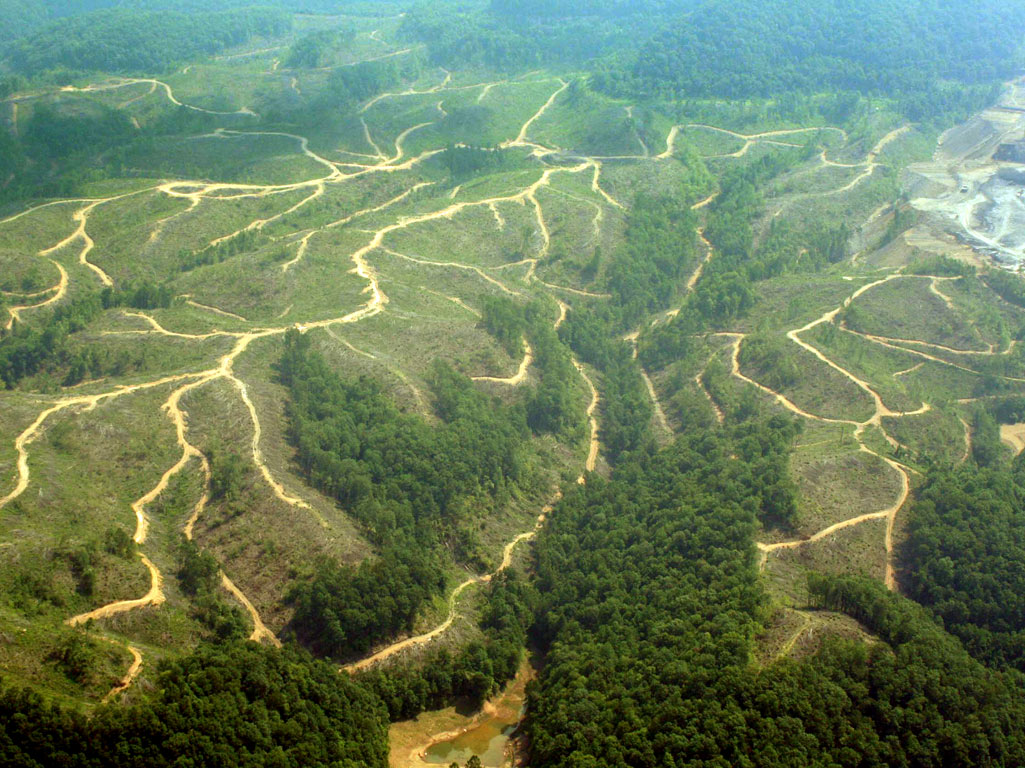
CLEARING — Before mining can begin, all topsoil and vegetation must be removed. Because coal companies frequently are responding to short-term fluctuations in the price of coal, these trees are often not even used comercially in the rush to get the coal, but instead are burned or sometimes illegally dumped into valley fills.
click to enlarge
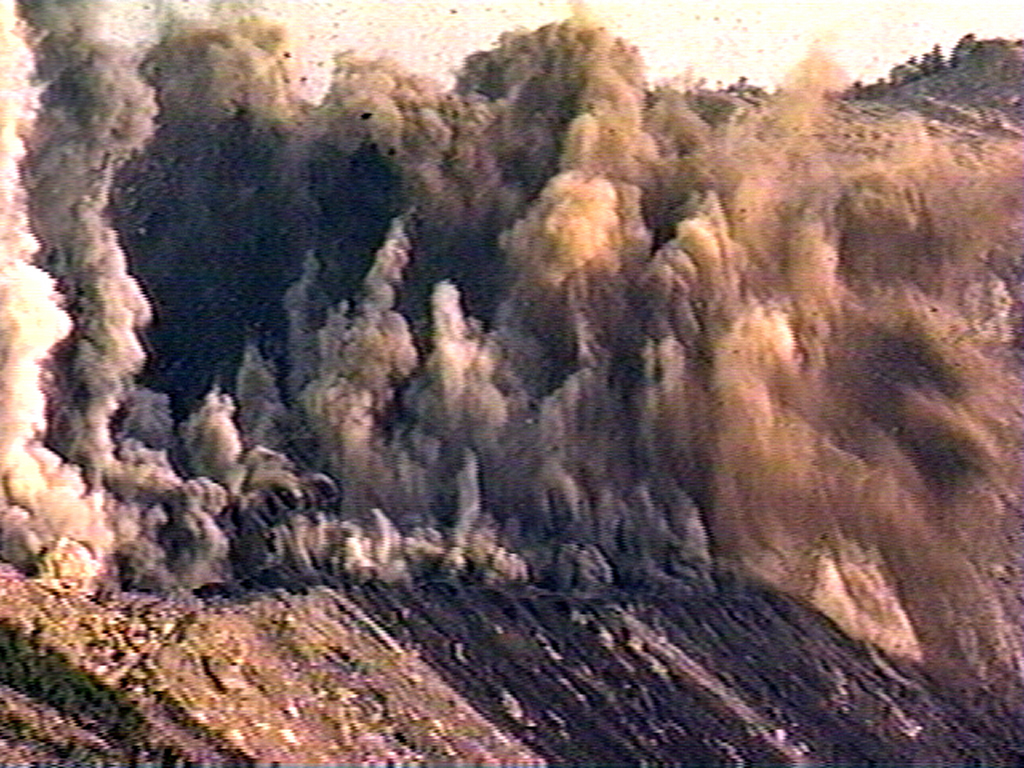
BLASTING — Many Appalachian coal seams lie deep below the surface of the mountains. Accessing these seams through surface mining can require the removal of 500-800 feet or more of elevation. Blowing up this much mountain is accomplished by using millions of pounds of explosives.
click to enlarge
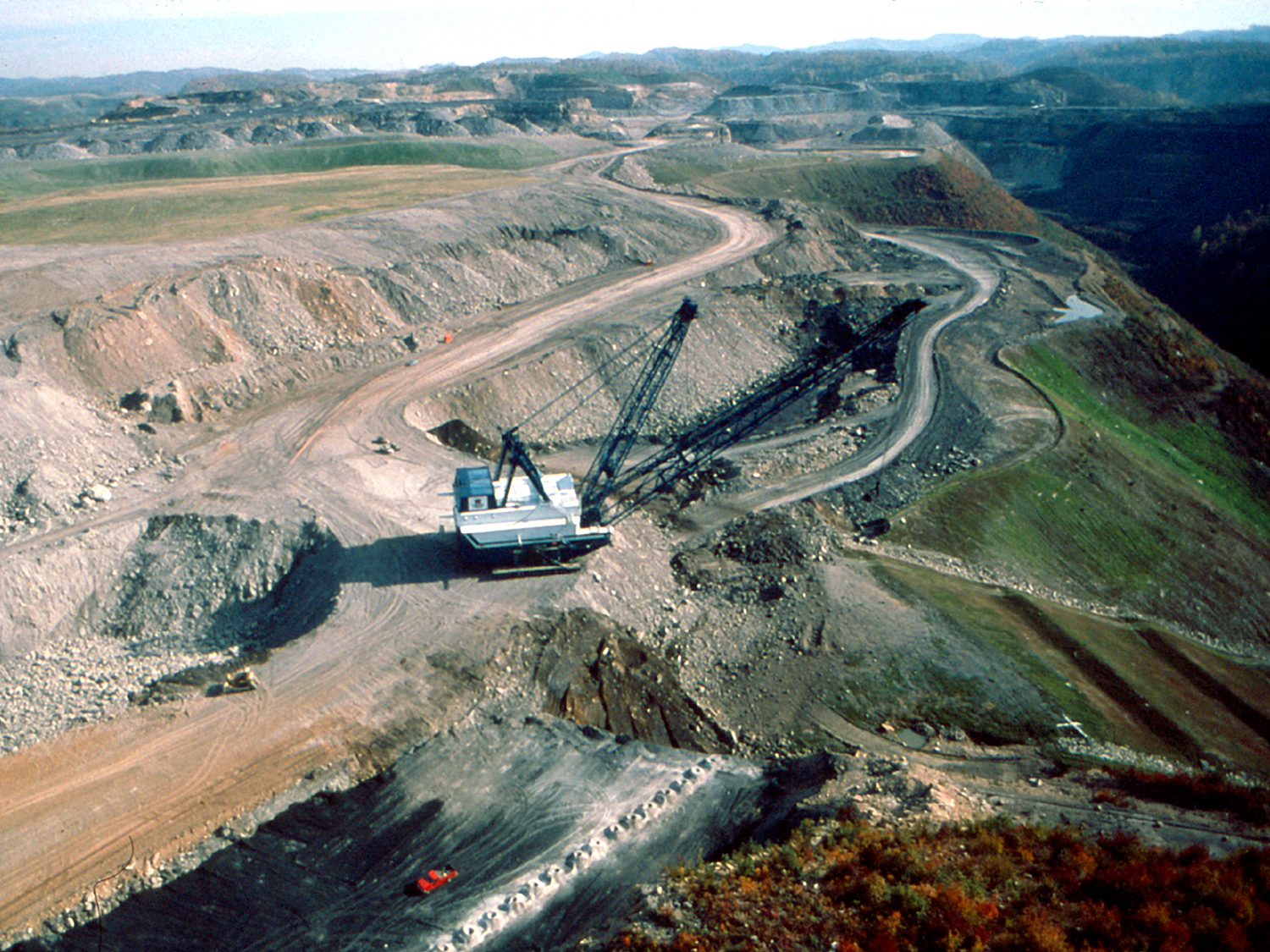
DIGGING — Coal and debris is removed by using this piece of machinery, called a dragline. A dragline stands 22 stories high and can hold 24 compact cars in its bucket. These machines can cost up to $100 million, but are favored by coal companies because they displace the need for hundreds of jobs. .
click to enlarge
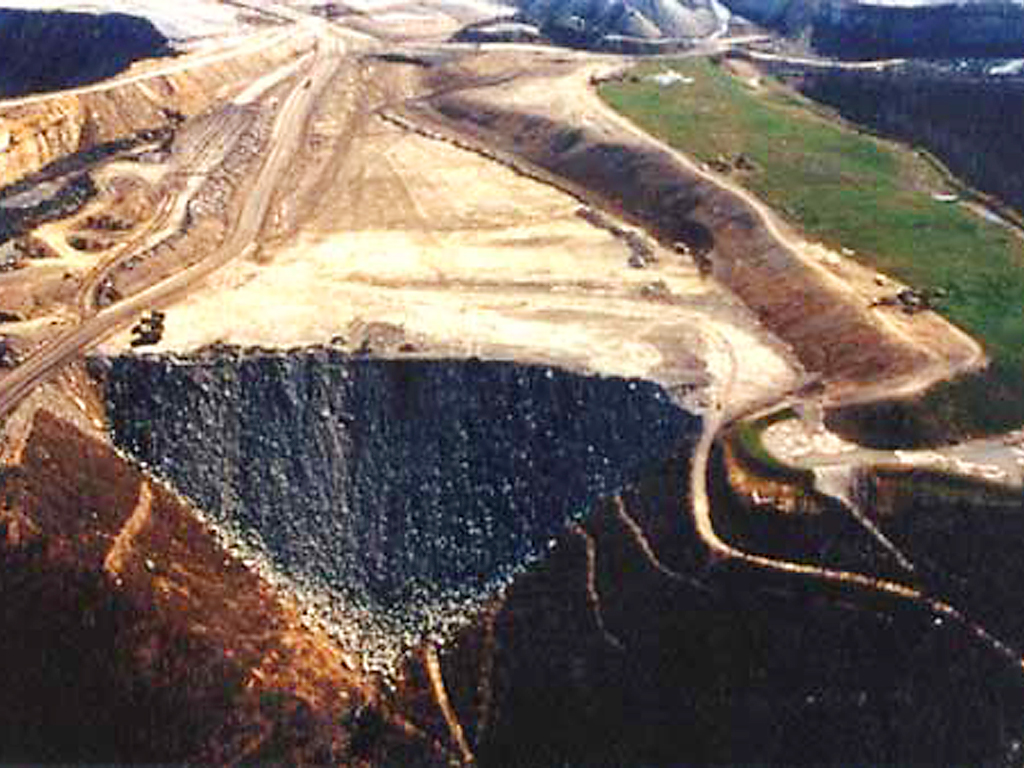
DUMPING WASTE — The waste from the mining operation, also known as overburden or spoil, is dumped into nearby valleys, burying streams. According to an EPA environmental impact statement, more than 1,000 miles of Appalachian streams were permitted to be buried as of 2001.
click to enlarge
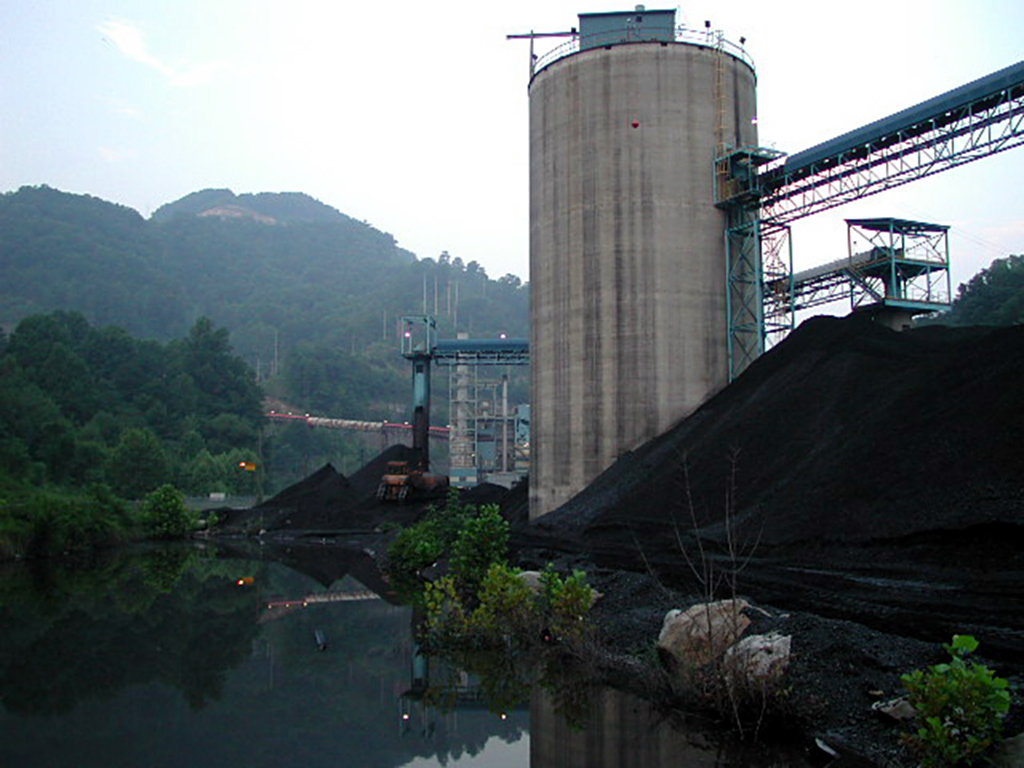
PROCESSING — The coal is washed and treated before it is loaded on trains. The excess water left over from this process is called coal slurry or sludge and is stored in open coal impoundments. Coal sludge is a mix of water, coal dust, clay and toxic chemicals such as arsenic mercury, lead, copper, and chromium. Impoundments are held in place by mining debris, making them very unstable. .
click to enlarge
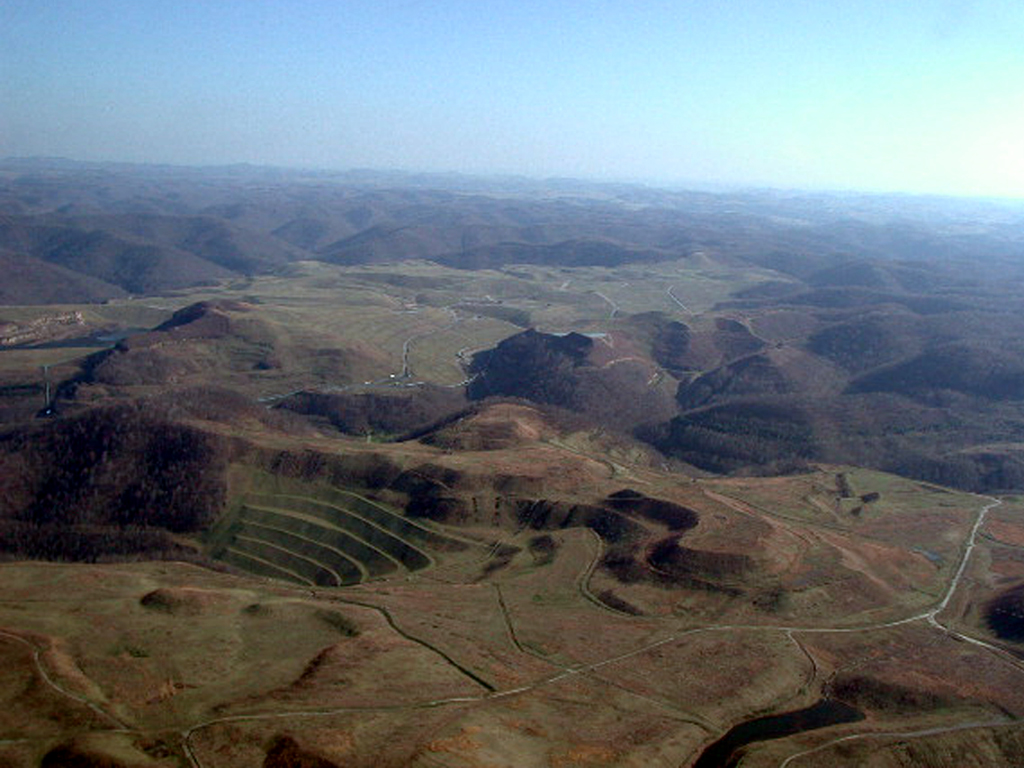
RECLAMATION — While reclamation efforts such as stabilization and revegetation are required for mountaintop removal sites, in practice, state agencies that regulate mining are generous with granting waivers to coal companies. Most sites receive little more than a spraying of exotic grass seed, but even the best reclamation provides no comfort to nearby families and communities whose drinking water supplies have been polluted and whose homes will be threatened by floods for the hundred or thousands of years it will require to re-grow a forest on the mined site.
click to enlarge

The steps outlined here alluded to some of the problems with MTR. When I have more regular internet access, I will go into greater depth about these cultural, social, environmental, and economic problems with MTR, and elaborate on what people are doing to stop it.